
Musings from Melinda Sinclair
about what it means to be (a) human today
Being (a) human
in the age of AI
(Part 1: From angst to agency)
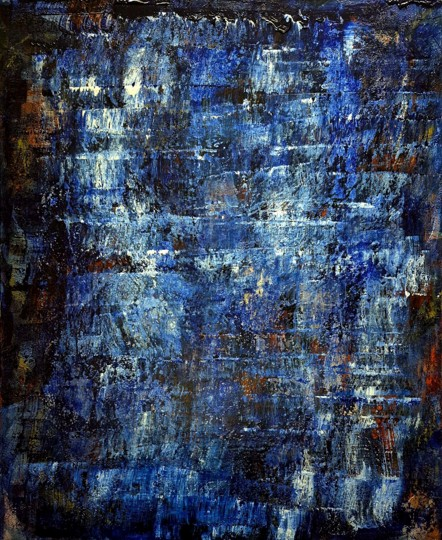
Reverberations
Copyright Melinda Sinclair, 2026
I will understand if you choose not to read these musings because you just do not want to read another word about AI. If, however, you do choose to read on, it might be helpful to keep the following in mind.
The musings that follow are mostly brief “outtakes” from a massive text that emerged from my efforts over the last few weeks to make sense of where things are at with AI, and what’s to be done about it. I found the issue impossible to ignore. It certainly took over much of my reading, listening, watching and thinking (and sometimes even sleeping!) time the last few weeks. And as I write this, I am still deep into the process of making sense of it all.
This means that the bits below are quite personal, revealing just where my mind is at with it all now. It might in fact feel a bit random and scattered. Definitely no AI editing to smooth it out! And no comforting list of things to do.
I decided, though, that there is enough here to make it worth sharing as part of my commitment to be in this conversation with you about what it means to be (a) human being today. Much as we might wish that the AI issue was not on the table, the truth is that it is very much on the table, and that it matters a great deal.
So in the interest of being in the messy real conversation with you about what deeply matters, here’s some of what I’ve been thinking about. You will notice that I start with angst – lots of it! As with so many other issues, being clear-eyed about what we’re facing and naming what we’re feeling about it is important.
The gift from this messy process, though, was that I could also see some footholds for agency alongside the angst. Towards the end of this set of musings I’m starting to point towards these footholds. In my October musings I’m planning to map out more of the space for agency with regards to AI.
Where are you at in terms of making sense of our AI world? How do you see your own relationship to AI? How are you feeling about it? What concerns you the most? What do you most want to safeguard as we move forward?
Memories of past scares reactivated
October 1962. The Cuban Missile Crisis. I am 9 years old, living in South Africa. We did not have television, but there were newspapers and radio. And even then I had this sometimes ridiculous drive to know and understand what’s happening in the world. Of course I knew about the horror of Hiroshima and Nagasaki. And had some sense of the danger we were all.
I remember that time as a moment of great anxiety and uncertainty, and a deep sense of helplessness. Just waiting to see how it will play out. I have visceral memories of sitting in the evening dusk on our front porch, listening to the news and to the adults talking about the crisis, imagining what it would be like if the worst were to happen. And being just so confused that grown-ups might allow that to happen, that they could not stop it. It just felt incomprehensible.
These memories got re-activated for me as the conversation around AI risks roared into the limelight this month or two, adding to our already impressive collection of “scary things that pose existential risks to humanity”. There is a chance that AI might actually annihilate humanity? What sounded like science-fiction even just a few years ago, has now become very real. So many things that we can choose to lie awake about! And the dramatic “annihilation threat” is not the only AI one. Other threats – like AI being used by bad actors – seems much more likely. Or the impact of AI on our social and economic world.
The difference between 1962 and now? I am now one of the adults my grandchildren look to as they wonder about the world we’ve created. Remembering my feelings from 1962 – along with the later angst about the climate – deepens my compassion for how young people move through our world today. The number of people I care about, and feel responsible for, is also vastly bigger than my 9-year old circle. Which also means my concerns are much heavier.
Something else that has changed: I now understand much better how complex and challenging it is for us humans to effectively intervene in big issues like this (the pandemic being just one recent example). I am aware of just how unequally power is distributed amongst the adults. Also about how complex the issues are, with many threads entangled with it – geopolitics, money, balancing upside and downside and more. And dare I say, how hard it is to find real wisdom in the conversation? How disturbing to notice sometimes a seemingly callous disregard for humanity, a casual dismissal of the uniqueness and preciousness of humanity and life on our planet.
One tiny bright spot in this is that there is now more awareness about the issue at the levels where some action might be taken (similar to what led to agreements to contain nuclear arms). Yes, there are indeed now actual conversations happening at a high level about slowing down and regulating. And as I write these words, my mind very quickly jumps to all the “ yes buts” that might scuttle any of the attempts at gaining control of our AI genie. For now I acknowledge the yes buts – just cannot argue with them! And still, I choose to notice the small points of light floating in this space.
In case you want pointers to sources that frame the issue …
There is, as we all know, a surfeit of materials – written, audio, video – about the state of AI today. So I debated long and hard whether or not to include any links to sources in these musings. But I also know just how hard it can be to find a helpful way through it all. After a conversation with a friend, I decided that it might be useful if I add a very select few resources I encountered in my wanderings.
I chose two voices – that of Geoffrey Hinton (Nobel laureate in physics, and known as the “godfather of AI”), and of Jensen Huan (CEO of Nvidia, the company whose chips underpin the whole AI industry). They sit basically on two opposite sides of the spectrum for two key questions: Is there a real existential threat from AI? Do we need to slow down AI development and impose government regulation on it? Hinton is concerned and argues for regulation. Jensen argues against there being a credible threat, and suggests that the industry can take care of any security issues. (And I cannot help but roll my eyes as I type this!)
I chose four sources that feature these two voices: two short, and two much longer. So you can choose how deep to dive.
The short of it …(about 20 minutes in total)
Two short CNN interviews that highlight the difference in opinion about AI risk and the need for regulation, both recorded just after the AI leaders’ presentations to the UN General Assembly.
‘Godfather’ of AI reacts to AI CEOs’ UN warnings – Interview with Geoffrey Hinton [8 minutes 7 sec]
If the AI product isn’t safe, don’t release it: Nvidia CEO Jensen Huang [10 minutes 41 seconds]
The long of it – much longer! These are two more extensive interviews with Hinton and Huang – the Hanna Rosin’s interview with Hinton is about 20 minutes (with a text transcript). And the Ezra Klein interview with Jensen a full 1 hour and 47 minutes.
Hinton Interview: The ‘Godfather of AI’ on the Best Chance Humanity Has to Survive (20 minutes)
Jensen Interview: Jensen Huang Thinks A.I. Alarmism Has Gone Too Far | The Ezra Klein Show (1 hour 47 minutes).
From skeptical to skittish to scared
In my early years as a Chomskyan linguist one of the big questions was whether anything other than a human can acquire human language. Essentially, whether language is one of the unique features of being human. Early efforts at machine translation were rather pathetic. I was deeply skeptical about the chance of computers truly mastering language. And yet, here we are today with AI having fully mastered language – with AI agents even using human language to communicate with one another. That still feels creepy and unsettling to me.
As AI entered more into the way we engage with the world and each other, I stayed somewhat skeptical. Yes, of course I am aware of and impressed by some of the potential upsides and benefits. But also a bit nervous. I remember my deep unease when I got into what neural networks and deep learning might mean for us. Of course I did not quite grasp it fully, but something uneasy stirred in my gut about it.
As time went on, and the potential impact of AI became more clearer, I became more and more wary about how it might be deployed, deeply troubled by some applications and uses of AI, and some of the ethical implications. And I became increasingly concerned that the energy invested in developing and implementing AI and making money from it is not at all matched by the measure of attention given to the impact on people and society.
So, now that we’ve reached the stage where AI might indeed get out of control, where the extent of its potential disruptive effect on society is becoming clearer, and where there is even a non-zero chance that it might annihilate humanity, I am scared. My concerns about AI don’t diminish my longstanding concerns about the climate – which was the existential threat that has been consuming most of my attention. The AI story, with its great sense of immediacy and urgency, just loads more onto the already creaking platform of my mind.
Impossible to ignore – even if I fervently wish we could
AI risks, of various kinds, have become a very prominent part of the context that we’re living in, alongside the risks associated with climate change, geopolitical instability, and more. These risks have been part of the picture for a while. Given the speed of AI development, though, this has become a five alarm fire.
When really smart people – leaders and experts close to the beast – warn that we barely have time to get control of this creation of ours if we are to counter the existential threats it poses, then anxiety and angst seem like very reasonable reactions. And ignoring the issues seems ludicrous, massively irresponsible. Not to mention relying on the companies and tech leaders themselves to manage the problem.
I find it hard to have patience with those who dismiss all of this so easily as fear mongering. Maybe those warnings are wrong. Of course that’s possible. But then, where there is smoke there is usually fire. And with reports multiple times a week now of AI misbehavior, there are actual flames to be seen through the smoky haze. Given the high risks that come with fire, at the very least the AI issue requires our serious attention and action. The stakes are too high to dismiss it all as a “hoax” or “fearmongering”.
And it is not just the risks of AI going rogue and killing us all that concern me. AI is changing everything about how we engage with the world, with one another, and even with ourselves. My sense is as a society we are not paying enough attention to what that all might mean, and that we are too cavalier about the costs of what we might lose in the process.
My feelings swirling around AI-risks conversation seems to echo my complex emotions about climate change. Anxiety and fear, yes, but also deep appreciation of what it means to be human, alongside anticipatory grief about what might be lost. While I can philosophically be in conversations about what I might mean for humanity to be in some sense “replaced” by silicon-based Superintelligence, I do find it impossible to accept that it is game over for humanity.
AI: Inevitably along for our ride around the sun, yet not inevitably taking everything over
As is my usual pattern when confronted with something that I am curious and/or concerned about, I spent the last few weeks in a deep dive into the AI waters as part of an attempt to make sense of where things are at, what it all means, and what we might do in response. Reading, listening, watching … writing, talking, …. Then more reading, listening, watching…
There is a growing ocean of material to swim through, and I have barely gotten wet. The space is also not easy to navigate. The water is murky, to say the least. Lots of different and opposing viewpoints. Lots of credible voices, and lots of less credible voices. Lots of noise.. And the breathtaking speed at which things change!
At times I was aware of how much my non-AI-expert status hindered me in this navigation. And sometimes I considered that it might actually be helpful (as I’ve sometimes found in the past for this kind of sense-making exercise).
The unsurprising outcome of all of this effort: Getting in some ways more confused and concerned as I went on… deeply feeling the presence of yet another big character in our already impressive cast of “existential threats”. And frustrated at yet another way we humans excel in messing things up. Have we smart humans now finally outsmarted ourselves?
Even amidst the swirl of the ocean of information threatening to pull me under, though, a few things did become crystal clear from my attempts to make sense of where things are at.
First, AI is now along for our ride around the sun, for better or for worse. Self-evident, yes, and it was still interesting to affirm this at an almost visceral level. There is no chance of ditching AI. It will only disappear if there is a catastrophic extinction event on our blue planet that takes everything out – and that I sincerely do not wish for.
Second, the question of what it means to be (a) human on this, our small blue planet, now lives fully in the context of AI. Yes, the question of AI annihilating humanity is a real one – though there are questions about the actual probability of this. Short of this dramatic outcome, though, AI is changing so much about our relationship to ourselves, to one another, and to all aspects of our world, that we have to revisit this question of what it means to be (a) human anew, with great urgency and effort.
Third, while there is uncertainty about where things are heading, there is room for agency to affect, manage, control, influence the development and deployment of AI. Claiming this space starts with refusing to accept that the AI development and deployment is inevitable, that there is nothing people like you and me can do to affect how things play out. Yes, AI’s presence might be inevitable; the shape and reach of that presence in our world, however, is not inevitable. (I love that one of the organizations that are working to marshall a broader community voice on this matter is actually called Evitable!)
Given all my angst about where we are at with AI, it was a relief to notice when some footholds for agency and action started to show through the murky waters of the ocean I’ve been swirling in. It felt like popping my head up above the waves, able to breathe just a bit more easily.
The challenge then became: How to map the space for agency so that it becomes clearer what, where, when and how we can actually act to help shape how, where, when AI fits into our world. Getting clearer on the action possibilities is important, since this kind of action is now inextricably linked to what it means to be (a) human today.
Starting to map out the space we have for agency in our AI world
One of the most helpful moves in my exploration around agency with regards to AI were some conversations with my oldest daughter, Marina Sinclair. She is professionally deeply involved in understanding how to support leaders needing to navigate this part of our context. You can see more about her work and approach here and here.
Our conversations focused on where there is room for agency for people like me and you who do not have the power to make the big decisions about slowing down and regulating AI. Out of these conversations emerged a tentative map of a multi-level space – different levels where we can act, each with different levers for engagement. Bottomline: We are not helpless in this. There is actually quite a bit we can do. And it is helpful to understand what the space looks like, what the different levels are, and how the levers could work.
Marina is currently actively working on fleshing out what this space might look like. I know for sure that we will have lots of conversations about it going forward. While Marina’s interest in agency with regards to AI is mainly in the leadership space, my own interest is in the broader space of “being human”. So, my plan for the October set of musings (yes I seem to have settled into a monthly cadence for these musings) is to explore one of the levels in this map in more detail.
Specifically, I want to look more closely at the agency we have in our very personal space around AI, and how we can make wiser decisions about it. In doing this I am driven by a core value: Humanity matters. Our humanness matters. Which means that I want to safeguard, maintain and nurture that which I most value about being human.
Doing this requires that we think deeply about what we value most about being human. What is most important to us? What do we see as essential? What do we feel is non-negotiable? Then we can start exploring how and where AI intersects with these concerns, and how we can make wise choices about these intersections. – for people like me and you who do not have the power to make the big decisions about slowing down and regulating AI.
Asserting our agency in regards to AI starts with intention
AI is indeed everywhere. It even pops up uninvited. Sometimes it is invisible, unless we think to look. Increasingly, our world is designed to make AI the preferred, easy choice. It’s the smooth way to move forward. Avoiding AI actually becomes harder, requires intention and more effort. The AI option becomes the easier one, the default that does not require an active decision, and no extra effort.
The more we make the AI option the default, though, the more we undermine our own agency. As we increasingly delegate to AI, at some point we might cross the line between delegating to AI to abdicating important domains of our lives and our engagement with the world to AI.
Letting AI be our default means that we have made a single choice that AI trumps all else. The alternative is being more deliberate in choosing when, where and how AI intersects with our thinking, communicating, and acting in the world. It is only by choosing deliberately, instead of mindlessly reverting to the default, that we retain a measure of agency.
It might be worth saying out loud that I am not advocating against all AI use. That would be quite ridiculous at this point – see the note about AI being inevitably along for the ride above. And it also does not reflect my own engagement with it.
Taking a stance for more deliberateness, and less default, is not about not using AI. It is not about saying you have to consider every single time whether or not to default to AI. What this is about, is making a more thoughtful choice about whether or not to use AI “in the moments that matter”, to quote Marina.
For myself, when thinking about being deliberate with regard to choosing the AI option, I keep coming back to the idea that speed and efficiency cannot be the yardstick for everything we do in the world. That way, far too much of the human experience gets lost.
So in my own choosing to be deliberate about where I use AI, I am watchful that speed and efficiency do not determine all my choices. I want to deliberately choose messy and slow in some cases – because of the pleasure in the process, and because of the learning in that. And most of all, because often out of the messy, inefficient process something unexpected and beautiful emerges.
The insights and perspectives – and new questions – I gained from the very messy, slow wrestling with the AI question over the last few weeks is a case in point. Another example for me: My very messy, inefficient painting practice!
Next time: How to be as human as humanly possible alongside AII.
About the image at the top of these Musings
Reverberate: If an event or idea reverberates somewhere, it has an effect on everyone or everything in a place or group
The energy of this painting – with its dramatic colors, its restless, vibrating surface – feels aligned with the reverberations of AI through our entire world.
Image details: Acrylic on canvas; 30 by 24 inches